After a busy summer of beach trips, family vacations, and back-to-back bookings, vacation rentals along 30A often need more than a standard turnover cleaning. Sand can settle into flooring and upholstery, kitchens and bathrooms experience repeated use, and less frequently cleaned surfaces may collect dust and residue. As fall brings changes to booking patterns, property owners have an opportunity to address these issues before the quieter season.
In Santa Rosa Beach and surrounding Emerald Coast communities, fall does not mean the end of coastal maintenance. Warm temperatures and humidity can persist, while salt air and fine sand continue to affect indoor surfaces. A property may have fewer guests in October than during peak summer, but it still needs a thoughtful cleaning routine to remain comfortable, presentable, and ready for future reservations.
A well-planned fall deep cleaning for vacation rentals helps owners go beyond the tasks completed during every guest turnover. By focusing on overlooked areas, material-specific care, and the effects of seasonal use, hosts can reset their properties and make ongoing maintenance more manageable.
Why Vacation Rentals Need a Deep Clean After Summer
Routine turnover cleaning is designed to prepare a property for incoming guests within a limited window. It typically prioritizes visible cleanliness, bathrooms, kitchens, floors, bedding, and other areas guests use most. During a busy rental season, however, there may be limited time to address every detail on every visit.
Over several weeks or months, fine sand can accumulate beneath furniture, along baseboards, inside sliding-door tracks, and around floor transitions. Fingerprints and residue can build up on cabinet fronts, glass doors, fixtures, and appliances. Upholstered furniture and decorative textiles may also retain dust and fine particles that are not immediately obvious.
A fall deep clean creates time to address this gradual buildup. It also allows owners or property managers to review the home’s condition after heavy use, identify items that need attention, and coordinate cleaning with minor repairs or inventory updates before the next busy period.
The coastal setting makes this seasonal reset particularly useful. Properties near Santa Rosa Beach, Alys Beach, and other 30A communities may experience frequent movement between beaches, pools, patios, and indoor living areas. Even when guests are careful, sand and moisture can travel throughout the home. Addressing these issues systematically helps maintain the property’s overall presentation.
Prioritize Floors, Kitchens, and Bathrooms
Floors deserve particular attention after summer because sand is both common and easy to overlook. Begin by removing loose debris from entryways, rugs, corners, and beneath movable furniture before cleaning the main floor surfaces. This reduces the amount of grit dragged across the floor during subsequent cleaning. Sliding-door tracks and transitions between indoor and outdoor areas should also be checked, especially in homes with pool access or large patios.
Cleaning methods should match the flooring material. Hardwood, natural stone, tile, and luxury vinyl can have different care requirements, so avoid assuming that one product or amount of water is suitable for every surface. For delicate or specialty finishes, follow the manufacturer’s guidance or consult a qualified professional.
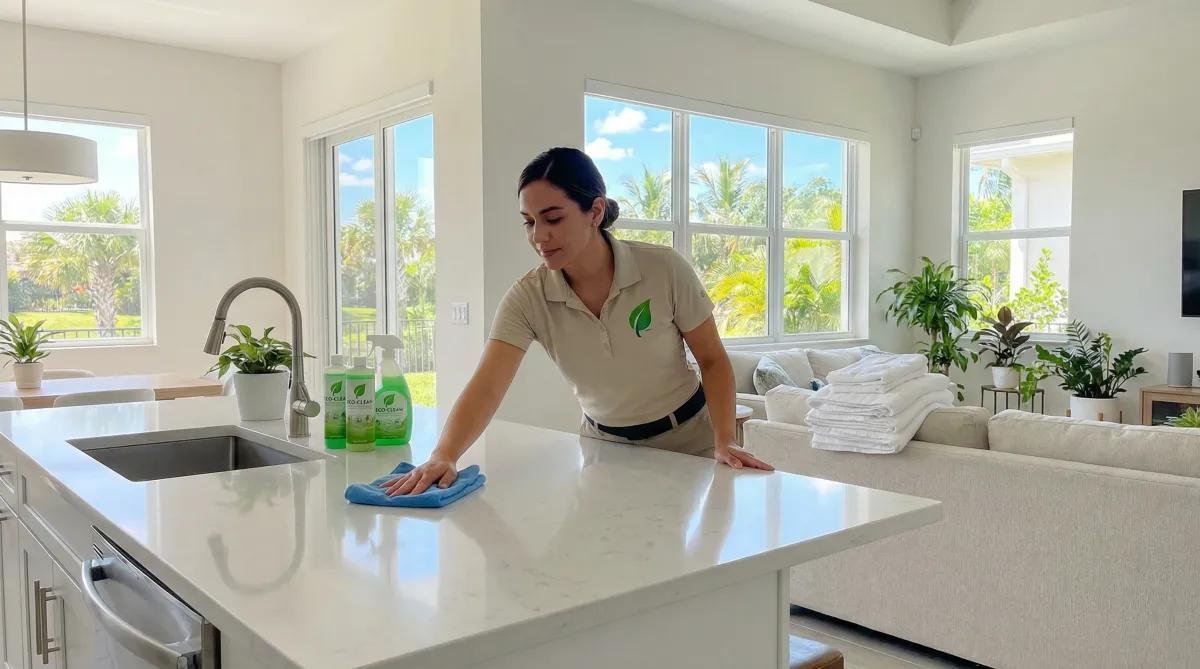
A seasonal deep clean gives vacation rental owners time to address kitchen and bathroom buildup that may be missed during quick turnovers, helping prepare the property for future guests.
Kitchens are another priority after months of guest turnover. Clean cabinet fronts, backsplash surfaces, appliance exteriors, handles, and areas around sinks where fingerprints and residue tend to collect. The inside of frequently used appliances may also need attention, depending on the property’s cleaning routine and condition. Removing crumbs and food residue helps leave the kitchen fresh and ready for the next stay.
Bathrooms require a similar level of detail. Shower doors, faucets, fixtures, tile surfaces, and areas around sinks can accumulate soap residue, mineral deposits, and moisture-related buildup. Clean surfaces using appropriate products, and ensure damp areas are dried properly. If you notice persistent musty odors, recurring mold, or moisture that returns after cleaning, investigate the underlying cause rather than treating the problem as ordinary dirt.
Don’t Overlook Furniture, Glass, and Hidden Areas
A vacation rental can look clean at first glance while still needing attention in less visible places. Baseboards, door frames, light fixtures, cabinet tops, and the areas beneath beds or sofas often receive less attention during quick turnovers. Including these details in a seasonal deep clean helps create a more consistent impression throughout the property.
Upholstery and textiles also deserve consideration. Sofas, accent chairs, decorative pillows, rugs, and curtains can collect fine sand and dust during a busy summer. Vacuuming suitable fabrics and following care labels can help refresh these items. Some materials may require professional upholstery or textile cleaning rather than standard surface care, particularly when stains, persistent odors, or delicate fabrics are involved.
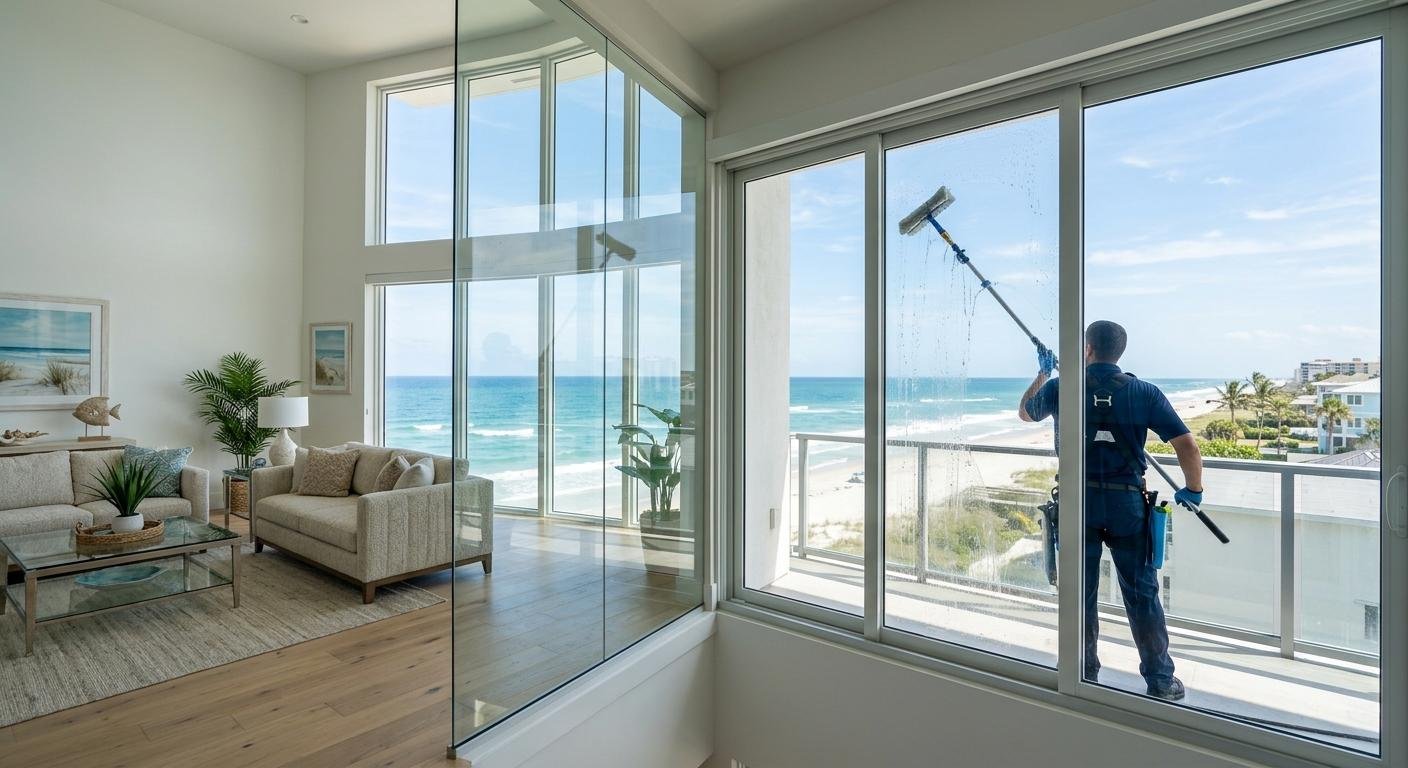
Glass doors, frames, furniture, and less visible surfaces can collect sand and residue throughout the rental season, making detailed cleaning important for maintaining a polished coastal property.
Large windows and sliding glass doors are important features in many 30A properties because they connect the living space with the coastal landscape. Salt residue, fingerprints, and everyday dust can reduce their clarity over time. Cleaning the glass, frames, and accessible tracks helps restore a polished appearance and removes debris that might otherwise be carried back indoors.
Pay attention to decorative surfaces and high-touch points as well. Door handles, switches, railings, and frequently used fixtures may need more detailed cleaning after repeated guest stays. The goal is not to clean every surface aggressively, but to select an appropriate method for each material and give overlooked areas the attention they need.
Account for Fall Humidity and Periods of Vacancy
As reservations become less frequent, some vacation rentals may sit empty for longer stretches. This creates a different set of maintenance considerations. Dust can accumulate without regular cleaning, and warm, humid conditions can still affect areas with limited airflow. A property that is closed up for several weeks may develop stale or musty odors, especially if damp towels, linens, or other moisture sources are left behind.
Before a home remains vacant, remove rubbish and perishable food, ensure textiles are completely dry, and leave bathrooms and kitchens clean. Check accessible areas for signs of leaks or water intrusion, particularly after heavy rain. Owners should also follow the property’s HVAC and humidity-control guidance and arrange periodic checks when appropriate.
Cleaning can remove common sources of residue and odor, but it cannot correct a plumbing leak, faulty air-conditioning equipment, or moisture trapped inside building materials. Persistent dampness, recurring musty smells, or visible mold may require assessment by a qualified maintenance or remediation professional. Addressing the source is more effective than masking the odor with fragrances.
For properties that continue accepting fall bookings, the cleaning schedule should reflect actual turnover rather than assuming activity has stopped. Professional short-term rental cleaning can maintain guest-ready standards between reservations, while periodic deep cleaning can address areas that are not covered during every visit.
Build a Practical Fall Cleaning Plan for Your Rental
The most effective deep-cleaning plan reflects the property’s size, materials, occupancy history, and upcoming booking schedule. A home that hosted guests continuously through summer may need more attention to floors, upholstery, kitchens, and bathrooms than a property that was used occasionally. Owners should also consider whether the home will remain active as a rental or spend several weeks vacant.
Rather than trying to complete every task at once without a plan, prioritize areas based on use and condition. Start with surfaces that collect sand and debris, move to kitchens and bathrooms, then address glass, furniture, fixtures, and overlooked details. Schedule specialist services separately when materials, stains, or maintenance concerns require expertise beyond routine cleaning.
A seasonal deep clean can also be coordinated with replenishing supplies, checking linens, reviewing guest amenities, and arranging repairs. Keeping these activities organized helps property managers avoid discovering preventable problems immediately before a guest arrives. It also provides a useful baseline for recurring maintenance throughout fall and winter.
For owners managing multiple properties across Santa Rosa Beach and the wider 30A area, a consistent process can make seasonal preparation easier to coordinate. Professional cleaning teams can help maintain standards across properties while adapting their approach to each home’s finishes and condition.
If your vacation rental needs a post-summer reset, B and B Cleaning Services can help you prepare for the fall season with professional cleaning tailored to your property. Request a quote to discuss your home’s needs and keep it clean, comfortable, and ready for its next guests.
Fall deep cleaning for vacation rentals helps 30A property owners address summer sand buildup, refresh kitchens and bathrooms, and prepare their homes for the quieter season and upcoming guest stays.